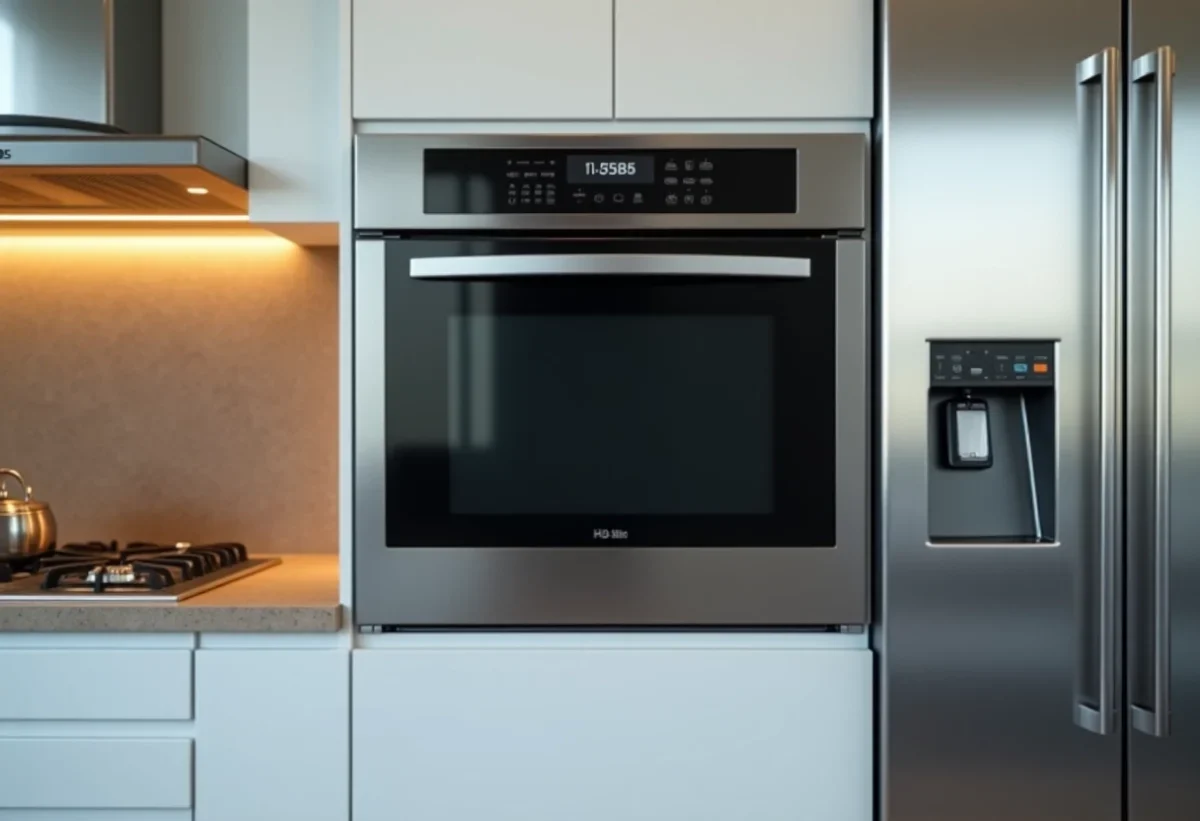
In the kitchen, choosing a microwave oven can be fundamental for the layout and efficiency of culinary tasks. With a varied selection, two options stand out: built-in and integrated models. Each offers specific advantages in terms of design, functionality, and space.
Built-in microwaves blend harmoniously into kitchen furniture, providing a sleek and modern aesthetic. On the other hand, integrated models, often more flexible, allow for optimized placement according to your needs. So, which one will best meet your culinary requirements and lifestyle?
The differences between a built-in and integrated microwave oven
The integrated vs built-in difference mainly lies in their installation and integration mode in the kitchen. Built-in microwaves are designed to be installed in a niche or specific cabinet, thus offering a continuous and aesthetic line with the rest of the kitchen elements. They blend perfectly into the environment, making them ideal for modern and minimalist kitchens.
Integrated microwaves
Integrated microwaves, on the other hand, are generally more flexible in terms of placement. They can be installed in a cabinet but can also be placed on a countertop. This versatility makes them particularly suitable for smaller spaces or non-standard kitchen configurations. Their installation is often simpler and less expensive, as it does not require major modifications to existing furniture.
Features and options
In terms of features, both types of microwaves offer similar options:
- Monofunction microwave: ideal for basic uses like reheating or defrosting.
- Grill microwave: allows for grilling and browning food.
- Combination microwave oven: combines microwave technology with the functions of a conventional oven, such as convection and grill.
Selection criteria
To choose between a built-in microwave oven and an integrated one, consider the following criteria:
- Power: ranges between 600 and 1200 watts.
- Volume: generally between 20 and 40 liters.
- Door: side-opening or top-down.
- Controls and programs: electronic display, automatic programs.
- Options and accessories: steam cooking, crisp plates.
The configuration of your kitchen and your specific needs will determine the type of microwave that is best suited.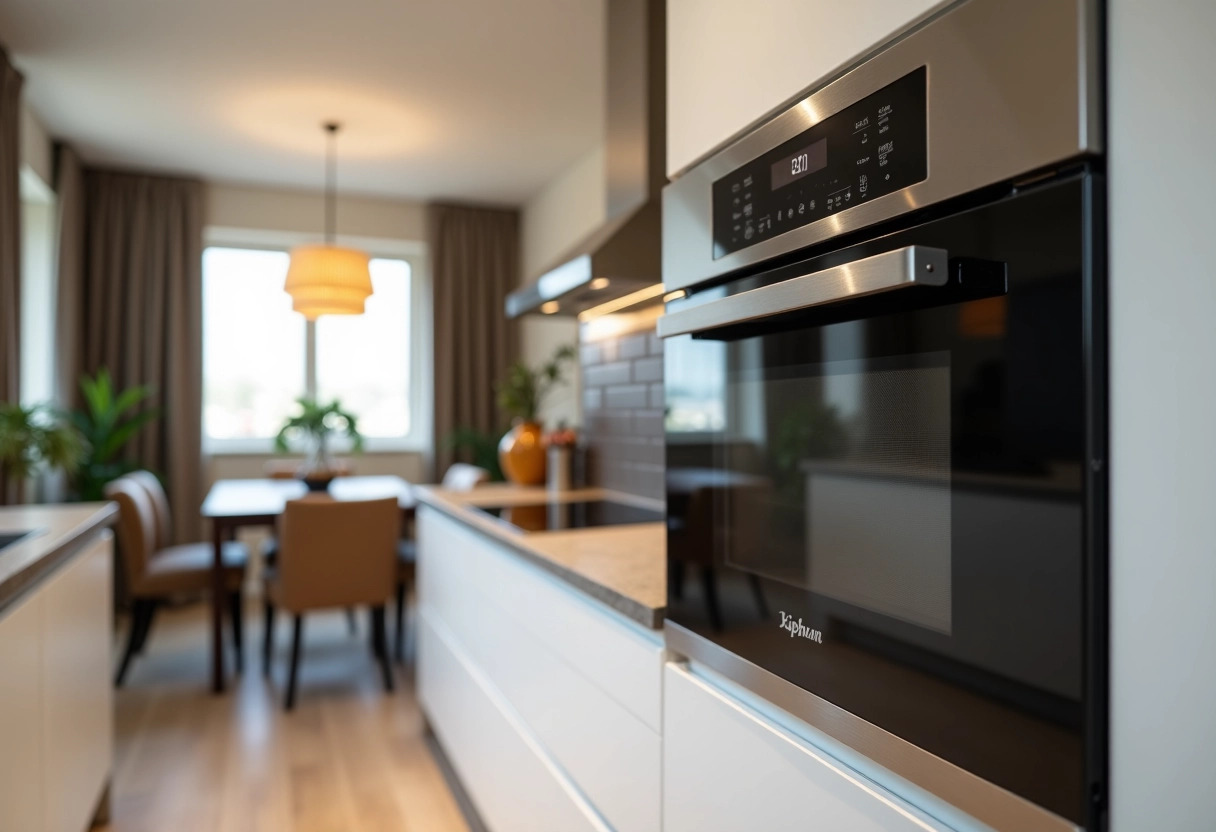
How to choose between a built-in and integrated microwave oven
To choose well between a built-in and integrated microwave oven, base your decision on several essential criteria.
Kitchen configuration
The configuration of your kitchen plays a decisive role. If you have limited space or a non-standard kitchen, an integrated microwave may be more suitable. Conversely, for a modern kitchen with clean lines, a built-in microwave offers a harmonious aesthetic.
Technical criteria
Consider several technical criteria:
- Power: Choose a power suitable for your needs, ranging from 600 to 1200 watts.
- Volume: Select a volume corresponding to the intended use, generally between 20 and 40 liters.
- Turntable: Choose between a removable or fixed turntable, depending on your preference.
- Door: The opening can be side or top-down, depending on your space configuration.
Features and options
The available features and options can also guide your choice:
- Controls and programs: Electronic display, automatic programs.
- Options and accessories: Steam cooking, crisp plates, convection for combination models.
Maintenance
Finally, consider the maintenance of the appliance. An interior coating of stainless steel, enamel, or epoxy makes cleaning easier and extends the lifespan of your microwave oven.