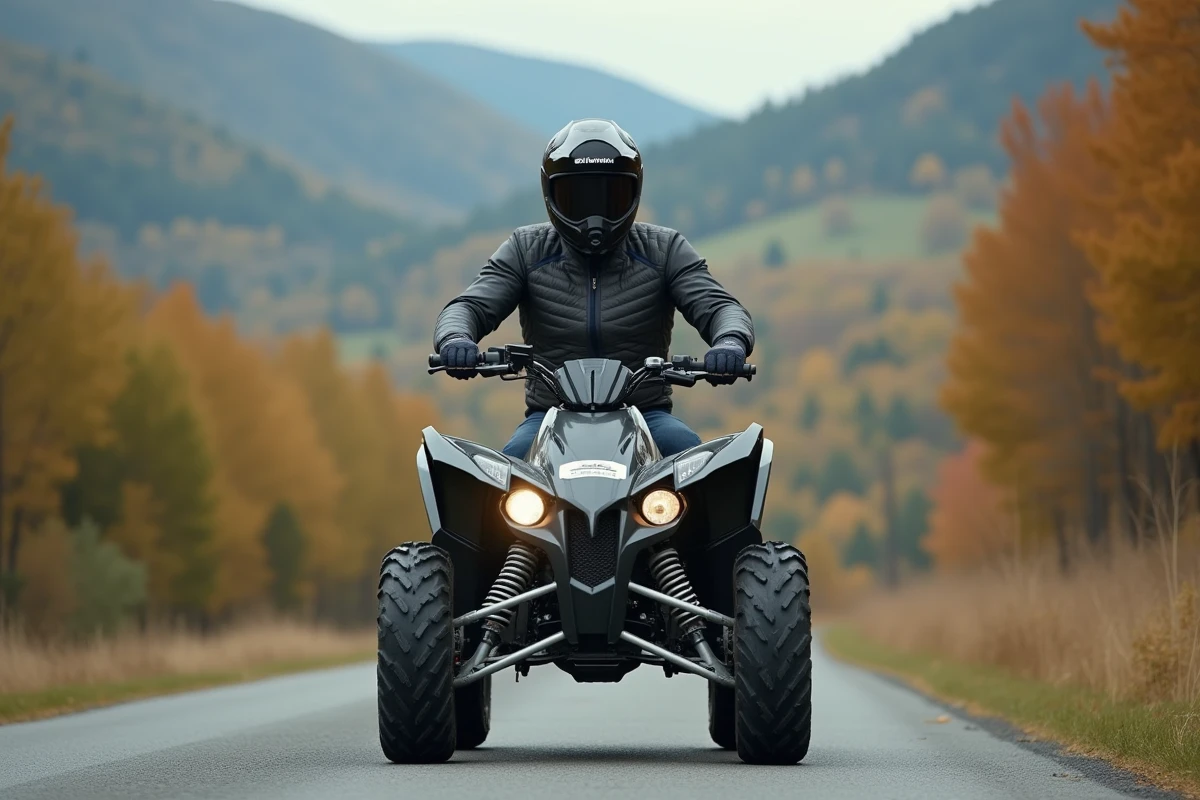
The adult road-legal quad with a B license occupies a regulatory niche that many drivers discover too late. In France, the L7e category allows for legal driving on public roads with a heavy quadricycle, requiring only a valid B license. The European framework has clarified matters in recent years, but choosing a suitable model remains fraught with technical pitfalls that product sheets do not always detail.
L7e Category and B License: What the Regulations Really Impose on Approved Quads
The European overhaul of the L categories distinguishes two families of quadricycles: L6e (light quadricycle, akin to a small car) and L7e (heavy quadricycle). Adult quads intended for the road almost systematically fall under the L7e-B1 category, which allows driving with a standard B license, without additional training or specific mention.
This classification is based on criteria of weight and power. An L7e quad must not exceed a certain unladen weight (excluding batteries for electric models) and its maximum power is capped. Since 2023-2024, sellers’ technical sheets have started to explicitly clarify this link between L7e and the B license, making it easier for buyers to read, but it does not exempt one from checking the European conformity certificate before any purchase.
To compare available models and identify the best adult road-legal quads, one must first ensure that the mention L7e is clearly stated on the vehicle’s registration document. A quad sold as “homologable” is not an approved quad: the distinction can be costly in terms of time and administrative procedures.
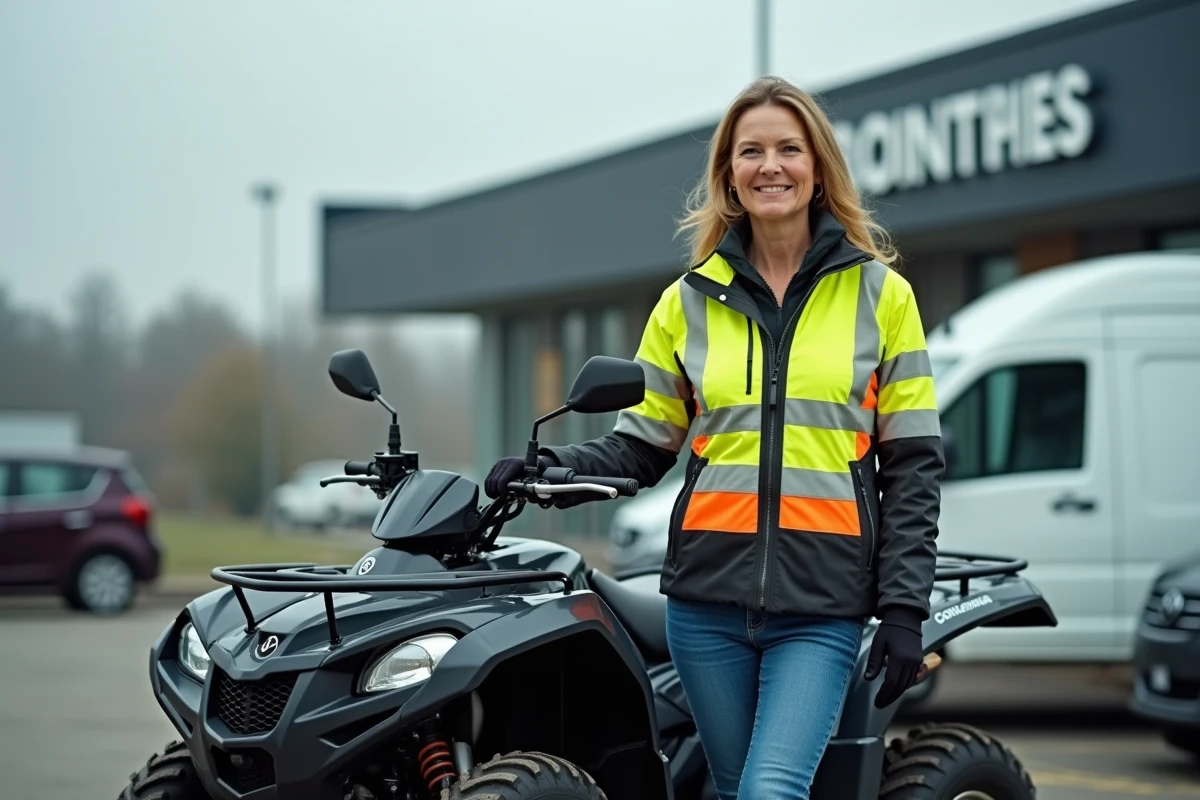
Engine Torque and Displacement: The Real Criteria for Choosing a Road Quad
Displacement grabs attention, but it only tells part of the story. A well-designed 400 cm3 quad can provide better sensations on the road than a poorly balanced 700 cm3. The parameter to monitor primarily is the engine torque expressed in newton-meters.
Torque determines the quad’s ability to accelerate out of a turn, climb a hill with a passenger, or tow a small trailer. On the road, where speeds remain moderate, having torque available from low revs radically changes the vehicle’s behavior.
Transmission and Road Behavior
Most road-legal quads use a continuously variable transmission (CVT). This system is well-suited for road use, but the quality of the CVT varies greatly from one manufacturer to another. A low-quality CVT can cause jerky acceleration and notable overconsumption.
Models equipped with a switchable 4×4 transmission offer interesting versatility: rear-wheel drive on dry roads to limit mechanical wear, switching to four-wheel drive on rough paths. This option adds to the budget but avoids the need to purchase two vehicles for two uses.
Insurance and Legal Obligations for Road-Legal Quads
Driving an L7e quad on the road entails the same obligations as a motor vehicle: registration document, technical inspection (for certain heavy quadricycles), and at least third-party liability insurance. Field feedback varies on this point, as not all insurers treat L7e quads the same way.
Some companies apply rates close to those of a large-displacement motorcycle, while others classify the quad in a specific, less expensive category. Comparing at least three quotes remains the only reliable method. For guided outings, some insurers require that the organizer holds a B license and has off-road experience, otherwise, certain guarantees may be excluded in the event of a claim.
- Check that the contract explicitly covers heavy L7e quadricycles, not just “two-wheelers”
- Ask if the theft and fire coverage includes outdoor parking, which is common for a quad
- Verify exclusions related to off-road use, even occasional
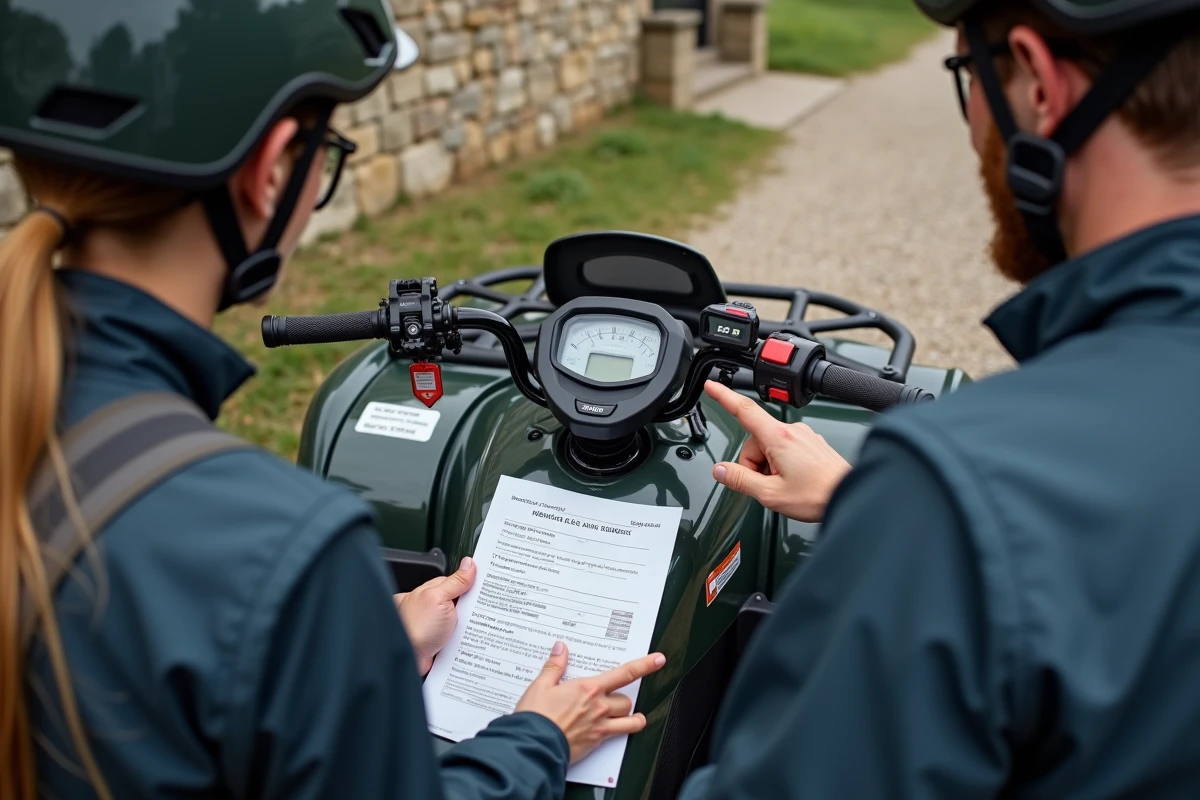
Hyper-Powerful Quads and B License: The Limits of a Vague Framework
The market is evolving in an unexpected direction. In 2024, preparers like Exeet GmbH in Germany marketed hyper-road quads derived from sport motorcycles, delivering around 210 hp and capable of reaching nearly 230 km/h, all accessible with just a B license in their home country.
These machines raise a question that European regulations have yet to uniformly resolve. The L7e category sets power thresholds, but national interpretations vary. A quad that is legal in Germany is not necessarily legal in France without individual approval from the DREAL.
Should We Fear Stricter Regulations?
The available data does not allow for conclusions about short-term developments. However, the emergence of these vehicles on social media and in specialized press fuels a debate that could accelerate stricter European harmonization. For a French buyer, caution means choosing a model whose L7e approval is validated by a manufacturer with a network in France, with spare parts available.
- Favor a quad whose European conformity certificate is recognized in France
- Ensure the availability of a network of dealers or authorized workshops
- Check that the model is listed in the SIV (vehicle registration system) databases
The market for adult road-legal quads with a B license remains a segment where regulations both protect and complicate. A properly approved L7e quad with good insurance can legally drive anywhere in France with just a B license. The trap lies not in driving, but in purchasing: checking the approval, engine torque, and insurance coverage before signing avoids most disappointments.