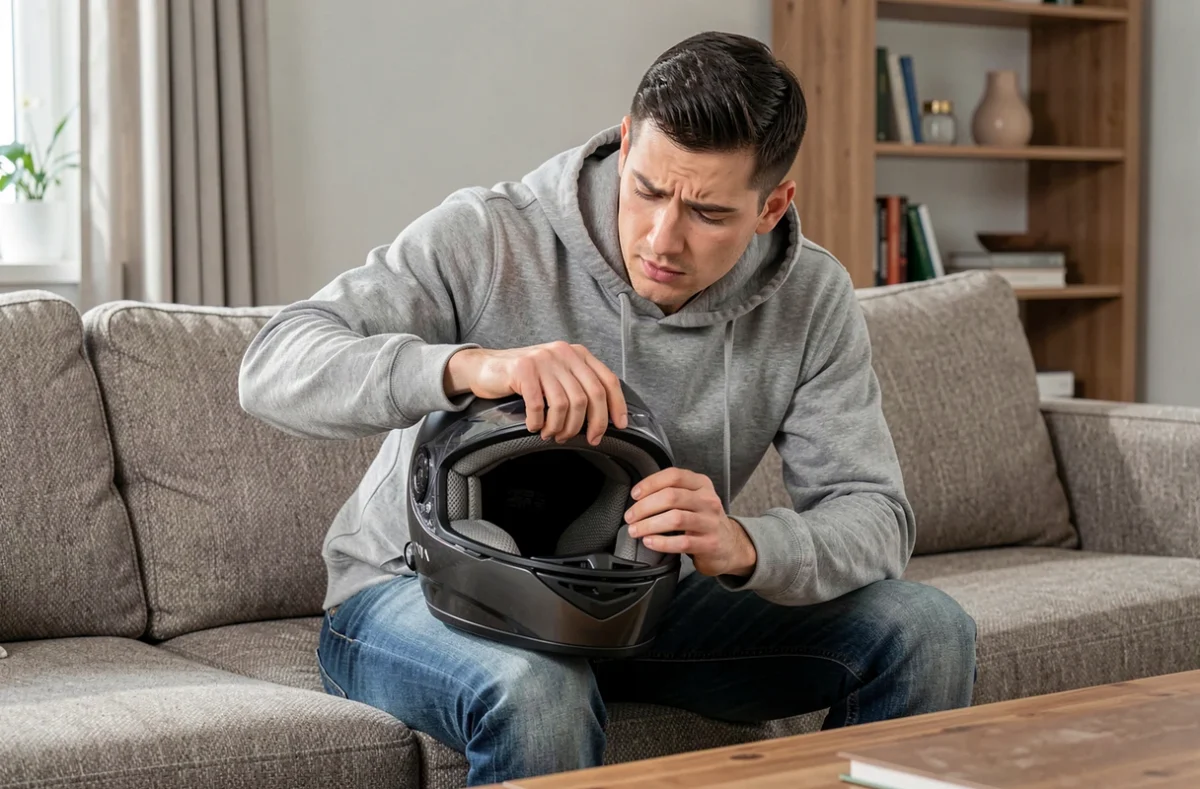
Decoding the tightness of your motorcycle helmet is crucial to ensure your comfort. A helmet that is too tight can cause pain, hinder blood circulation, and even obstruct vision. To remedy this, various adjustments are possible. Thinning the inner foam, extending the strap, or using an adjustable helmet can alleviate these discomforts. However, if the discomfort persists despite these modifications, exploring alternatives becomes necessary. Purchasing a larger model, seeking a professional for a custom fit, or using modular helmets are viable options to consider.
Diagnosing the Tight Fit: Understanding Why Your Motorcycle Helmet is Too Small
Understanding the discomfort caused by your motorcycle helmet can seem challenging, especially when you feel it is too small. This is a common issue among many riders and it is not just a matter of buying the wrong type or incorrect size. When a helmet does not fit perfectly on the rider’s head, it can cause various problems ranging from slight discomfort to severe pain on the road.
It is crucial for every rider to understand that wearing an ill-fitting helmet could potentially endanger their life. Indeed, if the helmet is too tight during a long ride, it can quickly lead to distraction due to the general discomfort that gradually sets in with the miles traveled. This can result in a fatal lack of concentration on the road.
Another less obvious but equally important factor lies in the very design of helmets. Often mass-produced to enhance affordability and availability in the market, they are designed to fit the standard dimensions of human heads. Unfortunately, these dimensions vary significantly among individuals: different bone formations, varying cranial circumferences… All these anatomical differences can make certain models uncomfortable or even impractical.
So how can this problem be solved? An ingenious enlargement system has been developed by certain leading manufacturers in the motorcycle equipment industry.
Adjustments and Modifications: Maneuvers to Increase the Comfort of Your Helmet
Optimizing comfort while using a helmet is not only an essential factor for an optimal audio experience, but also for preventing headaches and ear pain often associated with prolonged wear. To achieve this, simply properly adjust your helmet.
First, ensure that the top strap of the helmet rests comfortably on the top of your head. It should not be too tight or exert excessive pressure as this could cause pain over time. Similarly, it should not be too loose, risking it slipping and falling continuously.
Next, check that the cups or pads covering your ears are well positioned. They should completely envelop your ears without exerting excessive pressure on them. It is also important to ensure they are not too tight while ensuring their stability so that they do not move during use.
You should examine the movable part of the ear cups if it exists: some models offer the possibility to adjust the tilt of the cups, allowing for better alignment with the natural shape of your head and ears. Take advantage of this! It will significantly improve the overall comfort of the helmet.
Clever Alternatives: Options to Consider if Your Helmet Remains Uncomfortable
If your helmet still does not fit well despite various adjustments, you need to find solutions to optimize your listening comfort. Look at the size and design. You may have chosen a model that is too small or too large, exerting excessive pressure on your ears or failing to completely encompass them. Some models come with adjustable pads, while others offer different sizes to better fit the user.
Consider the material used for the pads. There are different types of materials: memory foam, velvet, leather… Each has its own advantages in terms of comfort and thermoregulation. Also pay attention to the weight of the helmet • the lighter it is, the less you will feel its presence.
Evaluating the sound level is also important. A too noisy audio helmet could be not only uncomfortable but also harmful to hearing in the long run.
You should also consider the type of helmet – wired or wireless? Wireless headphones offer great freedom of movement but can sometimes weigh more heavily on the head due to the built-in battery.
And if after all these adjustments, your problem still persists? In that case, do not hesitate to exercise your right to return the product to the seller.